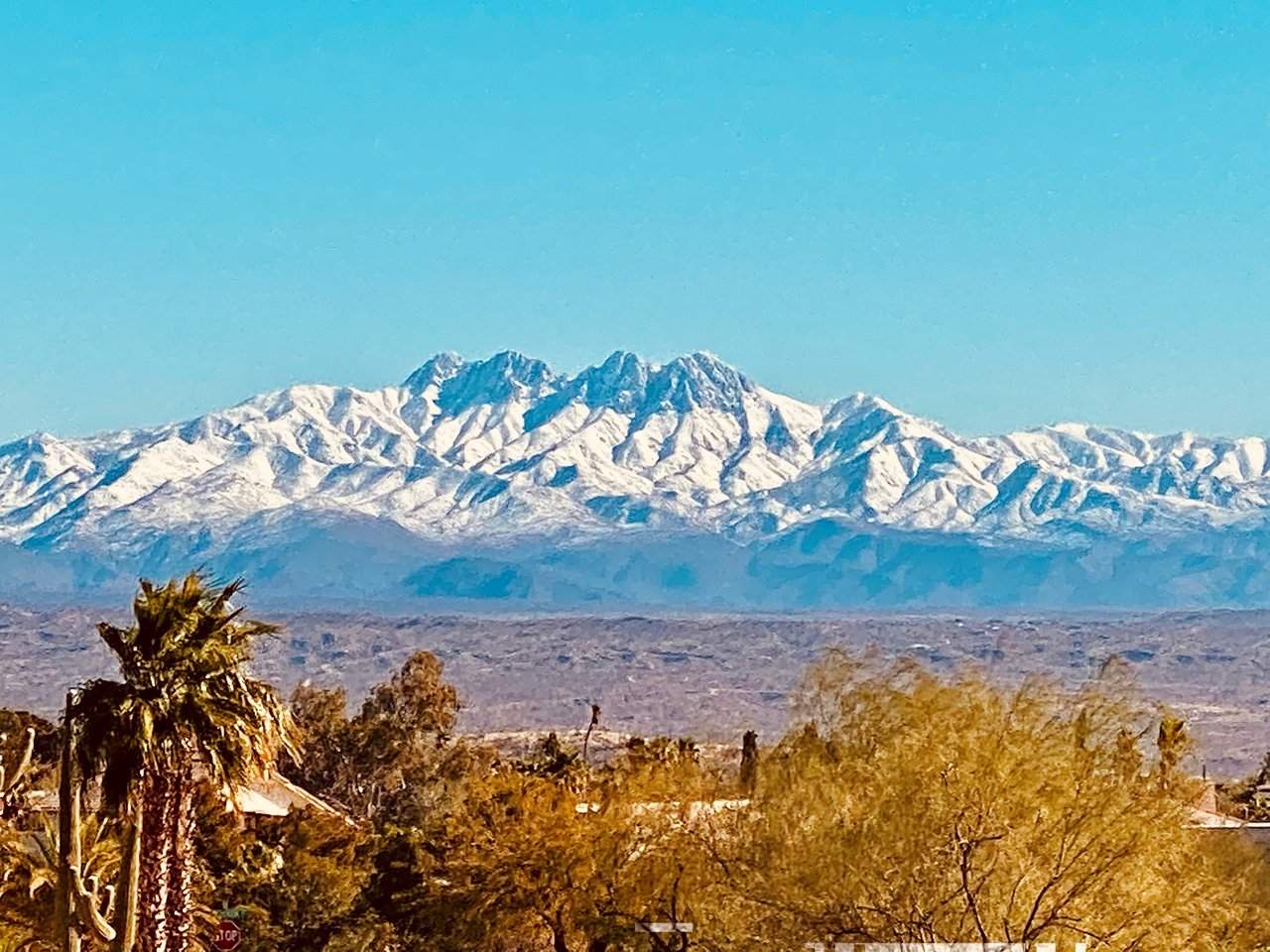
Four Peaks (We-Ko-Pa): The Meaning and Local History
Sonoran Desert Lifestyle Beth Kohoutek January 21, 2026
Sonoran Desert Lifestyle Beth Kohoutek January 21, 2026
Rising prominently on the eastern horizon, Four Peaks is one of the most recognizable landmarks visible from Fountain Hills, Arizona. Standing over 7,600 feet in the Mazatzal Mountains, these four summits have long served as a natural compass point for Valley residents, marking both sunrise and moonrise on clear desert days.

For the Yavapai people, Four Peaks is known as We-Ko-Pa. The mountains are deeply tied to survival, spirituality, and seasonal movement across the Sonoran Desert. Snow that collects on Four Peaks during winter feeds the Salt River, historically understood as a life-giving water source for the Valley below an essential connection that still supports communities today.
The continued significance of We-Ko-Pa is reflected in the nearby We-Ko-Pa Casino, Resort, and Golf Club, named in honor of the Yavapai people and their ancestral connection to the land east of Fountain Hills.
Four Peaks holds both sacred meaning and painful history. In 1872, Yavapai families were attacked by the U.S. Army in what is now known as the Skeleton Cave Massacre, an event that forever tied the mountains to remembrance and resilience. Yavapai oral history also speaks of the Kakaka, ancient beings believed to still inhabit the Four Peaks region.
Early settlers viewed the peaks as a resource for hunting, water, and opportunity. The construction of Theodore Roosevelt Dam at the base of Four Peaks in the early 1900s further connected the mountains to water management, recreation, and growth throughout the Valley.

The Four Peaks are made up of four distinct summits, each with its own name and position within the Mazatzal Mountains:
Together, these peaks form the iconic silhouette visible from Fountain Hills, reinforcing why the Yavapai people referred to the mountains collectively as We-Ko-Pa a single, powerful landmark rather than separate summits.
Designated as the Four Peaks Wilderness Area in 1984, the region now offers hiking, exploration, and outdoor recreation while remaining a powerful cultural landmark. From Fountain Hills, Four Peaks stands as a daily reminder of Arizona’s layered history, where natural beauty, indigenous heritage, and modern communities intersect.
Understanding the deeper story of Four Peaks allows us to appreciate not just the view but the land and people who have shaped this place for generations.
Sonoran Lifestyle
Take the 2026 Hiking Challenge

Events
Toy Story 5 to Fountain Hills

Events
Spooky Blast 2026:

Home Maintenance
Simple Steps to Protect Your Home

German Food, Music and Family Fun

Events
Free Ballet at Fountain Park

Events
in Fountain Hill, AZ

Events
Returns September 5
Events
Upcoming Workshops at the Artists’ Gallery
You want a personal real estate advisor with a commitment to excellence and innovative strategies.
Get in Touch With Our Team to Learn More

16824 E Avenue of the Fountains Ste 22 Fountain Hills AZ 85268